

The First Stanford Man
Hoover: An Extraordinary Life in Extraordinary Times, By Kenneth Whyte, Publisher: Knopf (752 pages), Publication date: October 10, 2017
Dan Wang of The Hoover Institution, a think tank on Stanford campus asked, how come America doesn’t build anymore and how come the leaders of China are all engineers whereas in the U.S. they’re all lawyers. Well, the Hoover biography harkens to a time where an engineering type was the head of the nation.
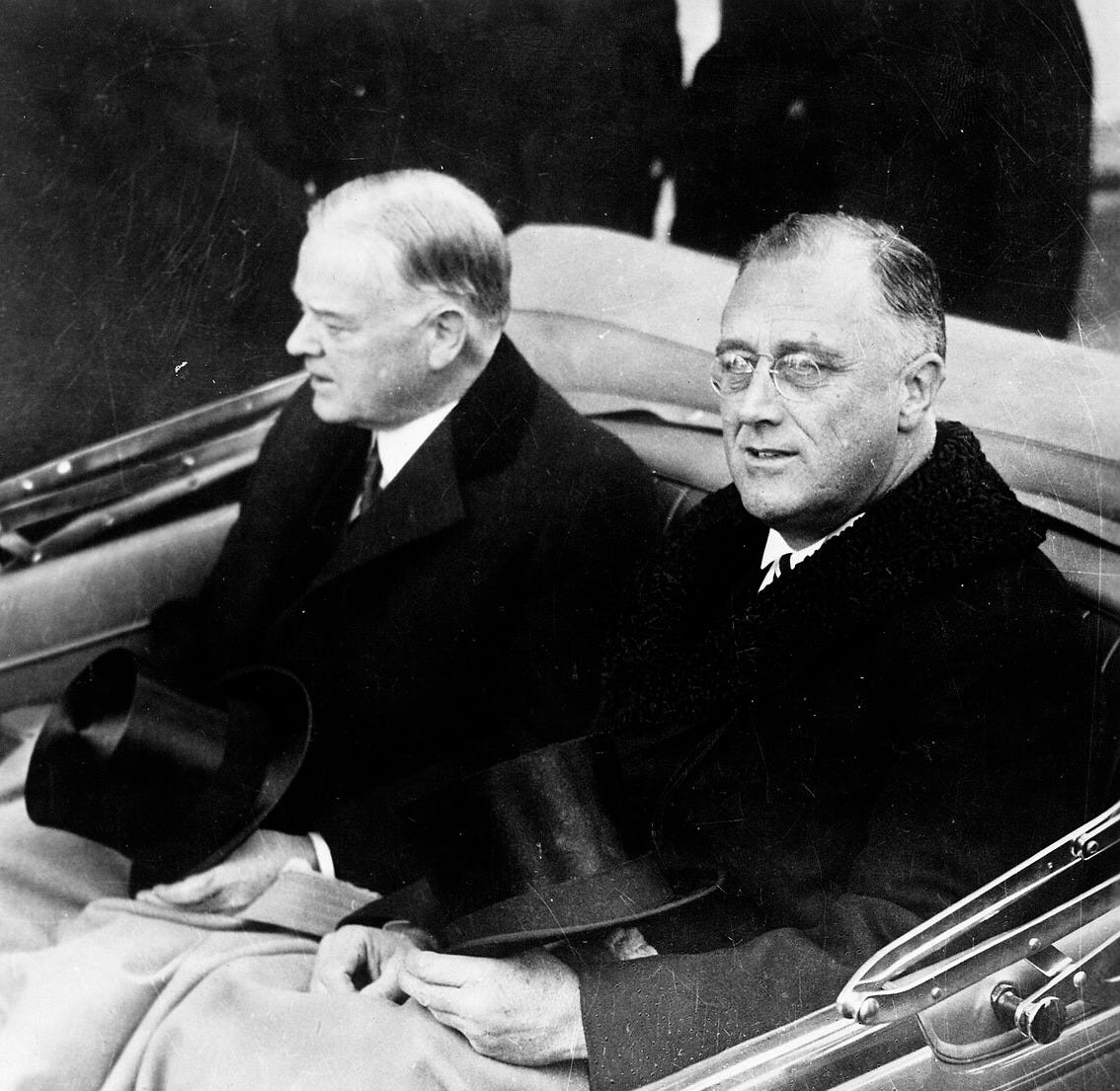
Hoover, a Quaker man whose parents died early, combined an intense work ethic and will that took him through Stanford’s first class (first to enroll), through a global mining career in Australia and China, to cement his status living in Europe. In World War I, his philanthropy leading a war famine relief launched him to the main political stage. Almost everyone recognized his organizational and analytical acumen, and he later served as advisors to presidents all the way to Kennedy (Hoover started post-presidential life at 58 years old).
Intriguing are the times his paths crossed with John Maynard Keynes, the fearsome intellect, whose reputation for endless working hours dovetailed with Hoover’s working nature. However, where Keynes contributed as fiercely to the intellectual sphere, Hoover was more an autodidact. Later in life, he seemingly picked up all his economics from reading books on transatlantic voyages. Nevertheless, Whyte suggests a mutual admiration and meeting of minds between Keynes and Hoover, especially noteworthy as they’d roughly map to different political spectrums in our modern view.
Whyte’s narrative slips into hagiography at times, led there by the defensive premise that Hoover was not directly responsible for the Great Depression even as the camps, Hoovervilles, continued to bear his name throughout the recovery. The facts assert Hoover wasn’t to blame, as evidenced by former Fed Chair Ben Bernanke, who accepted Milton Friedman’s monetarist explanation of the Fed contracting money supply at a time when liquidity was critical.
While Hoover can claim independence from the Fed, his urging for small government intervention, initially limited public works, and general cheerleading (in modern day, he’d probably tell blue collar workers to learn how to code) implicates him on some level. The author lays out that Hoover relaxed his views towards the end of his presidency while taking action on much too small a scale than his successor FDR.
Hoover’s presidency had the same quality of watching a competent man getting outplayed at chess. The odds just build against the less skilled player. The Great Depression had a nightmarish hue. Just when Hoover was declaring green shoots, the market or economic news would deliver a blow. This contemporaneous account echoed the narrative in John Kenneth Galbraith’s The Great Crash. Everybody knows it’s bad and they think that it’s going to turn around but then it doesn’t turn around, and instead it dips worse and this happens three, four, five times, and that’s what makes a Great Depression. It seems an unlikely scenario now due to modern data and interventions.
Yet prima facie, Friedman and Hoover’s admonitions of government as a self-bloating leviathan rings true. Incentives are difficult. The central tension is market versus democratic mechanics for resource distribution.
Isn’t it more important that our American institutions and self-correcting mechanisms prevent an imminent disaster like China’s gender inequality population pyramid collapse rather than missing out on Wang’s “breakneck” construction speed for high-speed rail and renewable industry? Maybe, but the two shouldn’t be exclusive.
Taking examples like California’s failed high speed rail and comparing to Chinese rail projects miss the economies of scale present on the compressed east coast populations. Engineering is always and everywhere a local phenomenon, to appropriate Friedman.
And Hoover’s presidential stint answers the question of the missing engineer in politics. Hoover was the last president to attempt a sort of arms-length presidency devoid of the sausage-making realities of politics. Whyte makes the case this wasn’t Hoover’s strength, and this deficiency caused his failures in the presidency. Even with a bully pulpit, effective governance requires much more consensus-building and animal spirit wrangling, than would the functions of a mining executive.
It would be the insanity of asking an engineer co-founder like Nvidia’s Jensen Huang to run for governor of California. The incentives for a successful engineer who has realized the opportunity that America offers (like Hoover), are too great to leave for the political sphere. The expected value is not there.
Yet some of Hoover lives on in the political prospects of another businessman-turned-politician Governor Newsome. There’s a glimmer of consensus building, business acumen, and economic inclusion in Newsome’s policy that is the thesis by which Trump ascended the presidency.
It’s hard to imagine Newsome succeeding without the monied astroturf RenTech Bob Mercer super PAC ur-operator putting thumbs on the dial at a cultural moment. Newsome is willing to fight fire with fire in redistricting, which bodes well. It isn’t however, an external force concentrated on operation without the self-referential distraction internal politics engenders.
It’s hard to take cues from Chinese politics. The haphazard ascension of the neutral Xi Jinping, neither of the coastal elites nor the inland empires, says we’re hostage to a lot more initial condition variance than we’d like. If anything, Hoover’s biography edifies us to control the circumstances we can, and that might be something we can share with China’s engineering class.